

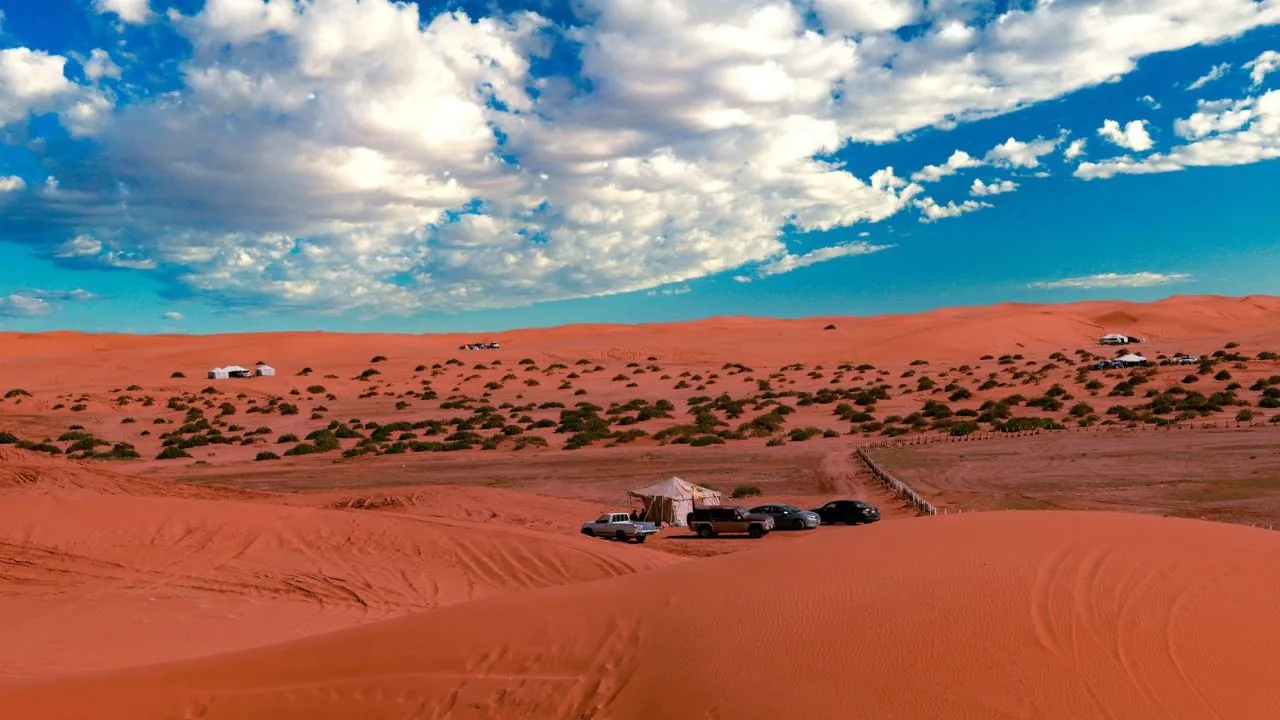
When someone mentions a desert, what comes to mind? Miles of golden sand, blazing sunshine and not a drop of water in sight? That picture fits some deserts rather well, but others look completely different. There are salt flats that reflect the sky, rocky valleys glowing red at sunset and even enormous stretches of ice.
These ten remarkable deserts around the world show just how varied a dry landscape can be. Some are famous for their size, others for their scenery, wildlife or the people who call them home. And yes, one of them is the coldest place on Earth.
The Antarctic Desert is the largest desert in the world, while the Sahara is the largest hot desert. Among the most striking desert landscapes are Bolivia’s Salar de Uyuni, Chile’s Atacama, Jordan’s Wadi Rum and the Gobi in Mongolia and China.
What Makes a Place a Desert?
A desert is defined mainly by how little precipitation it receives, not by how hot it gets or how much sand it contains. Some deserts are hot, some are cold, and many have mountains, gravel plains, salt crusts or rocky plateaux instead of endless dunes. Antarctica qualifies because its interior receives exceptionally little precipitation.
That distinction matters when comparing the world’s biggest deserts. Antarctica is the largest overall; the Sahara takes the title only when we are talking about hot deserts. The British Antarctic Survey’s explanation of Antarctic weather helps illustrate why an icy continent can also be remarkably dry.
Top 10 Deserts in the World
1. Salar de Uyuni, Bolivia — A Mirror Made of Salt
At first glance, Salar de Uyuni hardly resembles a desert at all. This vast salt flat in south-western Bolivia is a brilliant white expanse stretching towards the horizon, with little to interrupt the view. It is widely recognised as the world’s largest salt flat, formed from the remnants of ancient lakes.
Its most extraordinary transformation comes when a shallow layer of water covers the salt crust. Under the right conditions, the surface reflects the clouds so clearly that the boundary between land and sky seems to disappear. In the dry season, the landscape looks more like an enormous geometric mosaic, with polygonal patterns across the salt.
What makes it special: Mirror-like reflections in the wet season and striking white salt patterns when dry. Strictly speaking, it is a salt flat rather than one of the world’s major climatic deserts, but it deserves a place on a list of unforgettable arid landscapes.
2. Sahara Desert, North Africa — The World’s Largest Hot Desert
Few landscapes are as instantly recognisable as the Sahara. Spanning much of North Africa, this immense desert crosses several countries, including Algeria, Egypt, Libya, Mali, Mauritania, Morocco, Niger, Chad, Sudan and Tunisia.
Its rolling dunes are magnificent, but sand covers only part of the Sahara. There are also stony plains, mountains, dry valleys and scattered oases. In some places, ancient rock art tells stories of a time when parts of this region were much wetter than they are today.
What makes it special: Immense scale, varied terrain and a history shaped by changing climates and long-established communities. The Sahara is the largest hot desert, not the largest desert overall.
3. Gobi Desert, Mongolia and China — Land of the Flaming Cliffs
The Gobi is a desert of wide horizons, rocky ground and dramatic temperature changes. It spreads across southern Mongolia and northern China, and its scenery can feel almost otherworldly. Much of it is gravelly or rocky rather than covered by giant sand dunes.
One of its best-known sights is Bayanzag, the Flaming Cliffs of Mongolia. At sunset, the red-orange sandstone seems to glow. The cliffs are also famous for important dinosaur fossil discoveries, which give this remote landscape a fascinating prehistoric story.
What makes it special: Rugged scenery, dinosaur history and cold winters that challenge the usual image of a scorching desert. The Flaming Cliffs are a particular location within the Gobi, not another name for the entire desert.
4. Wadi Rum, Jordan — A Desert of Red Sand and Towering Rock
Wadi Rum has the sort of scenery that makes you stop talking for a moment. Huge sandstone formations rise above reddish sand, with narrow canyons and weathered rock faces creating an almost cinematic landscape.
The area’s history is just as compelling. Rock inscriptions and archaeological remains record human activity over thousands of years, while Bedouin communities maintain strong cultural connections to the region. Wadi Rum is a protected area and a UNESCO World Heritage Site, recognised for both its natural and cultural significance. UNESCO’s Wadi Rum Protected Area profile explains those values.
What makes it special: Monumental sandstone mountains, ancient inscriptions and a living desert culture. Guided visits can help travellers understand the landscape beyond its beautiful photographs.
Not every desert adventure has to be about climbing rocks or exploring rugged trails. Wadi Rum also offers quieter moments, from watching the sunset over its sandstone mountains to spending an evening beneath a sky full of stars. For travellers who enjoy peaceful escapes, this slower side of desert life can be just as memorable as the scenery itself. Of course, relaxation means something different to everyone, and some of the world’s most relaxing travel destinations offer a completely different experience, from tropical beaches to peaceful mountain retreats.
5. Thar Desert, India and Pakistan — Colour and Life in the Sand
The Thar, also called the Great Indian Desert, lies mainly in north-western India and extends into Pakistan. It has sweeping dunes and dry plains, but it is far from empty. Villages, towns, farms and pastoral communities are woven into the landscape.
Traditional textiles, music and architecture bring wonderful colour to the region. Wildlife also finds ways to survive here, from desert foxes and reptiles to birds adapted to the arid environment. Rainfall is limited and highly seasonal, which makes water an important part of everyday life.
What makes it special: A lively cultural landscape where desert ecology and human settlement sit side by side. It is a reminder that deserts are not necessarily uninhabited wildernesses.
6. Patagonian Desert, Argentina — A Windy, Cold Wilderness
Not all deserts shimmer in the heat. The Patagonian Desert, also known as the Patagonian Steppe, stretches across southern Argentina and is generally considered the largest desert region in South America.
Expect windswept plains, sparse shrubs, gravelly surfaces and a vast sense of space. The Andes help create dry conditions by blocking much of the moisture arriving from the Pacific. Guanacos and other animals are adapted to the open country, while the region’s stark beauty has a character all its own.
What makes it special: A cool, windy desert with sweeping views and distinctive steppe wildlife. It is very different from the dune-filled landscapes many people imagine.
7. Atacama Desert, Chile — Among the Driest Places on Earth
The Atacama in northern Chile is famous for its extraordinary dryness. Some parts receive very little rainfall, and its landscapes range from salt flats and barren plains to colourful rock formations and high-altitude lagoons.
There is another reason people travel here: the night sky. In suitable locations, high elevation, clear conditions and low humidity make the region exceptional for astronomy. Visitors may also encounter flamingos around Andean salt lakes and hardy plants in places where moisture is available.
What makes it special: Otherworldly terrain, remarkable stargazing and pockets of life in an extremely arid environment. It is in South America, beside the Pacific Ocean—not close to Africa.
8. Antarctic Desert, Antarctica — The Largest Desert on Earth
Here is the biggest surprise of all: the world’s largest desert is covered in ice. Antarctica qualifies as a desert because precipitation is extremely low across much of the continent, particularly in its interior.
Ice sheets, glaciers and towering mountains dominate the view, while fierce winds and extreme cold make conditions unlike almost anywhere else. Coastal areas and the interior differ greatly, and the continent’s enormous stores of frozen water do not make it a wet climate. Ice on the ground and precipitation falling from the sky are two very different things.
What makes it special: The world’s largest desert, extraordinary ice scenery and one of the most demanding environments on the planet. It is a polar desert, not a hot one.
9. Kalahari, Southern Africa — A Desert Rich in Wildlife
Spread across Botswana, Namibia and South Africa, the Kalahari is famous for its reddish sands, open grasslands and remarkable wildlife. The word ‘desert’ is often used for the region, although much of it is more accurately described as semi-arid because some areas receive enough seasonal rainfall to support extensive vegetation.
That rain can bring surprising changes to the landscape. Grasses flourish in favourable seasons, and animals such as antelope, meerkats and predators use the varied habitats. The region is also home to communities with deep knowledge of its environment, including San peoples.
What makes it special: A desert-like landscape where rainfall, wildlife and human history challenge the idea that dry places are lifeless.
10. Mojave Desert, United States — Joshua Trees and Dramatic Valleys
The Mojave Desert lies mainly in south-eastern California and southern Nevada, with smaller portions extending into Arizona and Utah. It is a land of striking contrasts: rugged mountains, dry lake beds, rocky canyons and the distinctive silhouettes of Joshua trees.
Death Valley is one of its best-known landscapes, famous for intense summer heat and dramatic changes in elevation. Joshua Tree National Park includes areas of the Mojave and the neighbouring Colorado Desert. The US National Park Service’s Mojave National Preserve information introduces the region’s habitats and natural features.
What makes it special: Iconic desert plants, accessible scenic landscapes and impressive geological variety. The Grand Canyon is not one of the Mojave’s national parks, although it is another celebrated landscape of the American Southwest.
Which Is the Largest Desert in the World?
Antarctica is the largest desert in the world. The Arctic is generally considered the second-largest polar desert region, while the Sahara is the largest hot desert. Lists of the world’s biggest deserts are therefore different from lists of the most beautiful or interesting places to visit.
There is no universally agreed ranking of the ten ‘best’ deserts. The selection above highlights scenery and character rather than ordering them by area. Salar de Uyuni is included for its extraordinary salt-flat landscape, while the Kalahari’s classification varies depending on how strictly ‘desert’ is defined.
When Is the Best Time to Visit a Desert?
It depends entirely on where you are going. For many hot deserts, cooler seasons make walking and sightseeing more comfortable. In high-altitude or cold deserts, winter can bring snow, severe winds and difficult travel conditions. Salar de Uyuni’s famous reflections depend on seasonal water, while clear night skies are a major draw in the Atacama.
Before travelling, check local weather, road access and park rules. Carry suitable water and sun protection where appropriate, and use experienced local guides for remote routes. Beautiful desert landscapes can change quickly, and their isolation is part of what makes them challenging.
Frequently Asked Questions About the World’s Deserts
The Antarctic Desert is the largest desert on Earth. Deserts are defined by low precipitation, so they can be icy as well as hot.
The Sahara in North Africa is the world’s largest hot desert.
No. Some deserts are cold, including Antarctica and the Gobi in winter. Many deserts contain rock, gravel, salt flats or mountains rather than continuous sand dunes.
The Atacama is among the driest non-polar regions on Earth. Parts of Antarctica are also exceptionally dry, so the answer depends on whether polar deserts and particular measurement methods are included.
That comes down to taste. Wadi Rum is famous for sandstone mountains, Salar de Uyuni for mirror-like salt flats, the Atacama for stark scenery and starry skies, and the Sahara for its immense dunes and varied terrain.
Final Thoughts
From Bolivia’s dazzling salt flats to the frozen wilderness of Antarctica, the world’s deserts are anything but ordinary. Some are harsh and almost silent; others are full of wildlife, culture and colour. The more you look at them, the harder it becomes to think of a desert as nothing but sand and heat.
Perhaps that is their greatest attraction. Each one has a different story to tell, and the landscape is only the beginning.

The experience of the desert it’s a great experience.