


Weird sports are real competitive activities with rules, participants, and, in many cases, annual championships. They feel unusual because they replace familiar balls, courts, or race tracks with muddy bogs, snowballs, giant poles, trampolines, chessboards, lawn mowers, or even rolling cheese. Some began as local traditions. Others were deliberately invented by people who wondered what would happen if two completely different games were combined
Quick Answer
Some of the weirdest sports still played today include cheese rolling, wife carrying, bog snorkelling, toe wrestling, chess boxing, fierljeppen, yukigassen, underwater hockey, bossaball, buzkashi, hornussen, and sepak takraw. They may look bizarre at first, but most demand genuine balance, speed, strength, accuracy, endurance, or tactical skill.
That is part of their charm. A sport does not have to look like football, cricket, tennis, or basketball to test an athlete properly. Around the world, communities have turned old customs, difficult landscapes, playful dares, and unlikely ideas into contests people train for and proudly return to each year.
This guide brings together 30 strange sports from different regions. Some are established international games. Some remain closely tied to one town or culture. A few are better described as novelty competitions than fully governed sports, and we have made that distinction clear rather than pretending they all operate at the same level.
What Are Weird Sports?
Weird sports are unconventional competitive activities that use unusual rules, settings, equipment, movements, or cultural traditions. The word weird is subjective, of course. A game that looks strange to an outsider may feel completely normal to the people who grew up playing it.
Broadly, unusual sports tend to fall into four groups:
- Traditional regional sports, such as buzkashi, hornussen, and fierljeppen.
- Hybrid sports that combine familiar games, such as chess boxing and bossaball.
- Extreme or terrain-based contests, such as bog snorkelling and cheese rolling.
- Novelty competitions, such as extreme ironing, ferret-legging, and cardboard tube duelling.
The best examples are not strange merely for attention. They reveal something about local history, geography, humor, or the human habit of turning almost any challenge into a competition.
Weird Sports at a Glance
| Sport | Best known for | Origin or strong association | Type | Still played? |
|---|---|---|---|---|
| Ferret-legging | Keeping ferrets inside tied trousers | England | Endurance novelty contest | Occasionally |
| Man versus Horse Marathon | Runners racing horses over rough terrain | Wales | Endurance race | Yes |
| Fierljeppen | Vaulting across canals with a long pole | Netherlands | Traditional athletic sport | Yes |
| Yukigassen | Organized team snowball fighting | Japan | Team sport | Yes |
| Dog surfing | Dogs riding ocean waves | United States | Judged novelty sport | Yes |
| Bog snorkelling | Racing through a peat bog trench | Wales | Timed race | Yes |
| Toe wrestling | Pinning an opponent’s foot with the toes | England | Combat-style contest | Yes |
| Fistball | Striking a ball over a net with the arm or fist | Europe | International team sport | Yes |
| Underwater hockey | Pushing a puck across a pool floor | England | International team sport | Yes |
| Adult kickball | Baseball-style play with a large rubber ball | United States | Recreational team sport | Yes |
| Chess boxing | Alternating chess and boxing rounds | Modern European circuit | Hybrid combat sport | Yes |
| Cheese rolling | Chasing cheese down a steep hill | England | Traditional race | Yes |
| Beard and moustache competition | Judged facial-hair styling | International | Novelty competition | Yes |
| Kaiju Big Battel | Monster-costume theatrical wrestling | United States | Performance sport | Yes |
| Cardboard tube duelling | Breaking an opponent’s cardboard weapon | Australia | Novelty contest | Occasionally |
| Mud pit belly flop | Judged belly flops into mud | United States | Novelty contest | At selected events |
| Bossaball | Volleyball, football, acrobatics, and trampolines | Spain/Belgium | Hybrid team sport | Yes |
| Snow polo | Polo played on packed snow | Europe | Equestrian sport | Yes |
| Wife carrying | Carrying a partner through an obstacle course | Finland | Obstacle race | Yes |
| Lawn mower racing | Racing modified ride-on mowers | United Kingdom | Motorsport | Yes |
| Competitive pillow fighting | Striking with regulated pillows | International | Combat entertainment | Yes |
| Extreme ironing | Ironing clothes in difficult locations | England | Adventure novelty sport | Occasionally |
| Buzkashi | Mounted riders contesting an animal carcass | Central Asia | Traditional equestrian sport | Yes |
| Ostrich racing | Racing mounted or harnessed ostriches | Africa and United States | Animal-based novelty race | At selected events |
| Thumb wrestling | Pinning an opponent’s thumb | International | Informal contest | Yes |
| Egg-and-spoon racing | Balancing an egg while running | United Kingdom | Traditional race | Yes |
| Three-sided football | Three teams sharing a hexagonal pitch | Europe | Experimental team sport | Yes, on a small scale |
| Hornussen | Launching and intercepting a small projectile | Switzerland | Traditional team sport | Yes |
| Sepak takraw | Volleyball-style rallies using feet and head | Southeast Asia | International team sport | Yes |
| Poohsticks | Racing sticks beneath a bridge | England | Recreational contest | Yes |
30 Weird Sports From Around the World
Humans have a very wild and weird side to them- a reckless, adventurous, and mysterious side. This weird obsession with adventure and thrill often leads them to weird sports.
Some of the dangerous sports, rejecting all boundaries of games and play, are as follows:
1. Ferret-legging
Ferret-legging is every bit as uncomfortable as its name suggests. A competitor places live ferrets inside loose trousers, secures the waist and ankles, and tries to endure their movement for longer than anyone else. Historical versions of the contest prohibited underwear and required the animals to remain healthy and fully toothed.
The activity became associated with working-class communities in northern England and gained wider attention during the 1970s and 1980s. Reported endurance attempts stretched beyond five hours, which is difficult to imagine even before considering the claws, teeth, and complete lack of personal space.
Why it is unusual: The athlete is not running, throwing, or scoring. The challenge is simply to remain composed while two curious animals move around inside the trousers.
A necessary caution: Ferret-legging is now rare and controversial. Animal-welfare concerns make it very different from an organized sport with a modern governing body. It belongs on this list as a piece of sporting folklore, not as something readers should casually recreate.
2. Man Versus Horse Marathon
In Llanwrtyd Wells, Wales, runners take on horses and riders across a hilly, muddy course of roughly marathon-like endurance rather than a standard road marathon. The event began in 1980 after a pub discussion about whether a human could beat a horse over long-distance cross-country terrain.
Runners usually start before the horses, and the timing is adjusted to account for that gap. Horses undergo veterinary checks, while human competitors have to cope with climbs, streams, uneven tracks, and the slightly alarming sound of hooves approaching from behind.
Humans do not win often, which makes each victory memorable. The first runner to beat the horses overall did so in 2004.
Why it works as a real sport: This is not a comedy sprint against a racehorse. Terrain, endurance, pacing, and heat management can reduce the horse’s natural speed advantage and make the contest genuinely competitive.
3. Fierljeppen
Fierljeppen is a Dutch and Frisian canal-vaulting sport that turns an everyday landscape problem into something spectacular. The athlete sprints toward a long pole planted in the canal, jumps onto it, climbs upward as it tips, and then launches toward the opposite bank.
A successful jump needs several skills in quick succession: sprint speed, accurate timing, upper-body strength, climbing technique, balance, and the courage to commit while the pole is moving. Misjudge any part of it and the canal provides a muddy answer.
The sport is organized competitively in the Netherlands, particularly in Friesland, with measured distances and specialist athletes.
Interesting fact: Fierljeppen is not just pole vaulting over water. Competitors actively climb the pole during the crossing to gain height and distance before the final leap.
4. Yukigassen
Yukigassen is what happens when a childhood snowball fight grows up, puts on a helmet, and learns tournament rules. Developed in Sobetsu, Hokkaido, Japan, the sport is played by two teams that use a fixed supply of prepared snowballs.
Players shelter behind barriers, throw strategically, and try either to eliminate opponents by hitting them or capture the opposing flag. Protective helmets and face shields help control the obvious risks. Matches are divided into sets, so wild throwing rarely beats teamwork and careful use of cover.
Yukigassen has spread beyond Japan to snowy regions in Europe, North America, and elsewhere.
Why it deserves more respect: Beneath the playful surface, it is a quick tactical game involving accuracy, communication, movement, and resource management.
5. Dog Surfing
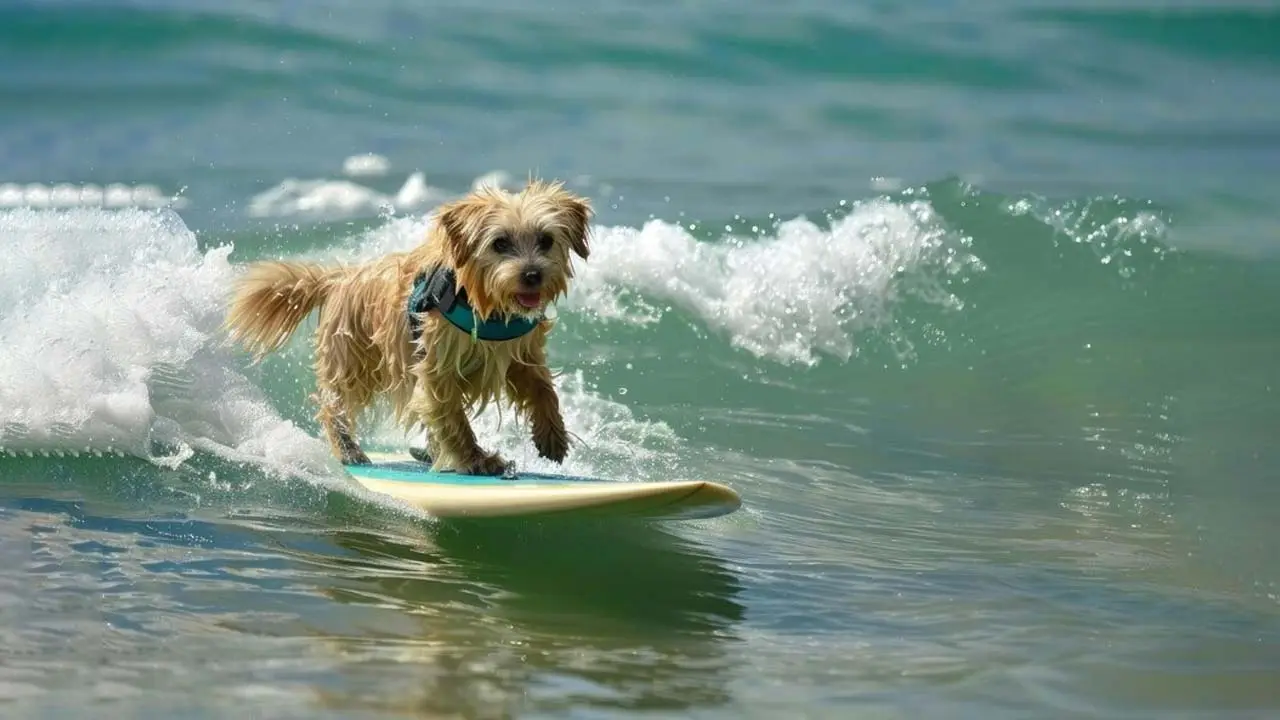
Dog surfing features dogs riding surfboards alone or with a human partner. The best-known modern competitions are associated with California, although images of dogs on boards go back much further.
Judges may consider balance, confidence, wave size, ride length, style, and whether the dog remains securely positioned. Some events divide entries by dog size and tandem format. The atmosphere tends to be more cheerful than fiercely competitive, and many contests support animal charities.
What makes it weird: Surfing already demands timing and balance from humans. Here, the athlete may have four paws, no understanding of the scorecard, and a strong temptation to jump into the water.
Responsible participation matters. A dog should be comfortable around water, properly fitted with a flotation device, supervised, and never forced onto a board for entertainment.
6. Bog Snorkelling
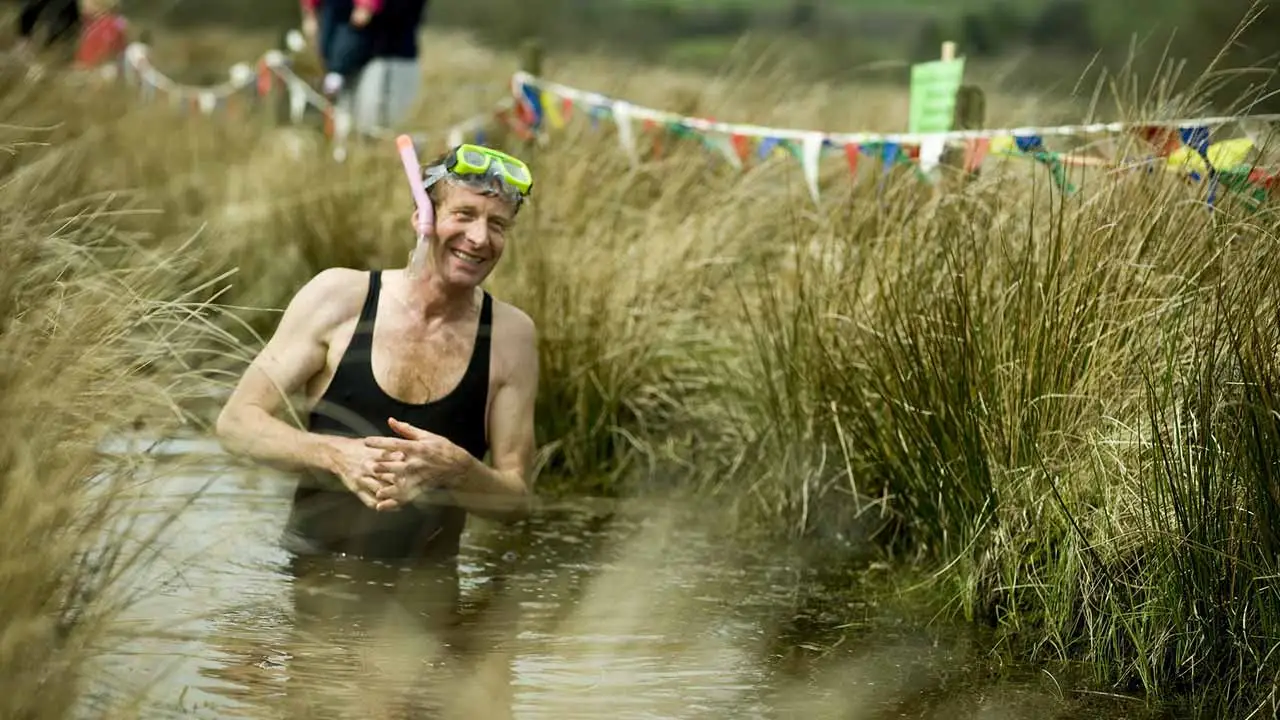
At the World Bog Snorkelling Championships in Wales, competitors race through a long water-filled trench cut into a peat bog. They wear snorkels and flippers, but conventional swimming strokes are generally not allowed. Progress comes mainly from kicking through dark, cold, murky water.
The event has been held near Llanwrtyd Wells since the 1980s and has become one of Britain’s best-known eccentric competitions. It sounds comic, but moving quickly through thick bog water is exhausting.
Why it is difficult: Visibility is poor, the water is cold, the channel is narrow, and flippers must do most of the work. It is closer to an awkward underwater sprint than a relaxed swim.
It also gives Wales an impressive claim: the same small town is strongly associated with both bog snorkelling and the Man versus Horse Marathon.
7. Toe Wrestling
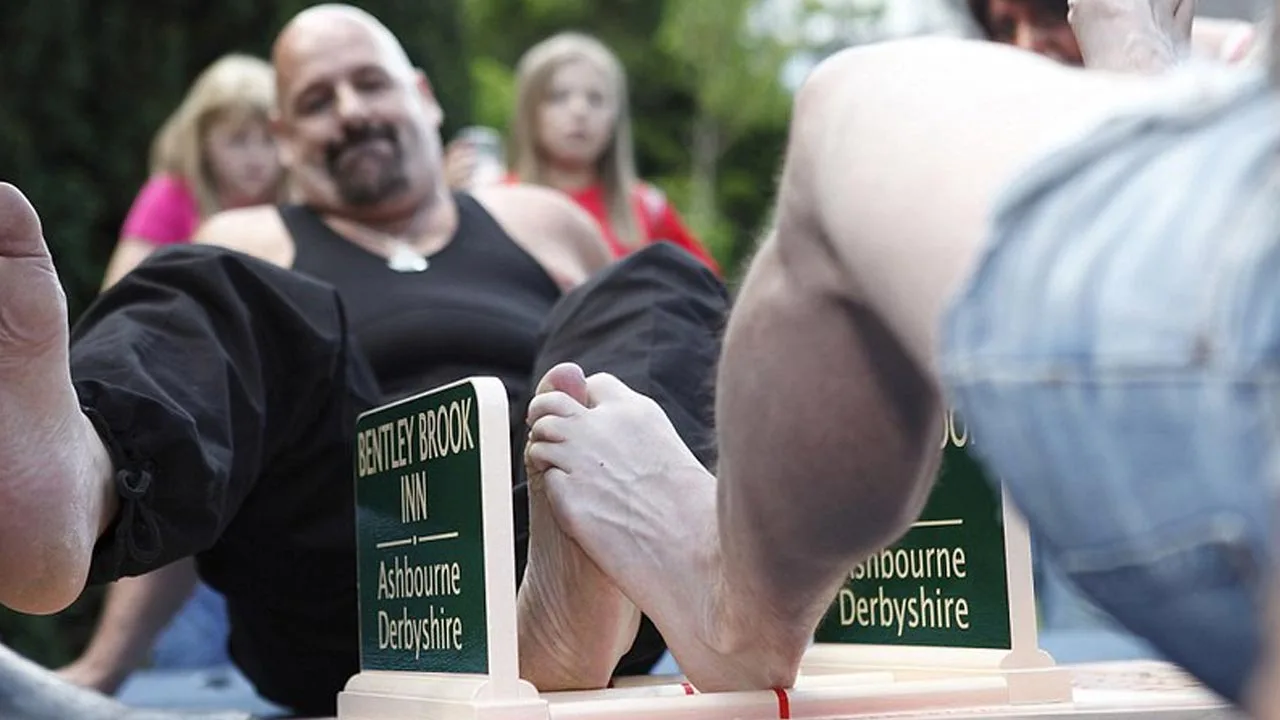
Toe wrestling began in Derbyshire, England, in the 1970s. Two opponents sit facing each other, lock toes, and try to force the other person’s foot to the side, much like arm wrestling performed at the least glamorous end of the body.
Matches are commonly contested over alternating feet. Foot inspections and hygiene rules are important because competitors are making direct contact at close range. The playful names and pub-born history can hide the fact that serious toe wrestlers train flexibility and lower-leg strength.
Why it is unusual: Most combat sports use the hands, arms, or full body. Toe wrestling turns a tiny joint movement into the entire contest.
It has also produced memorable competitor nicknames, which may be the only part of the sport more creative than the idea itself.
8. Fistball
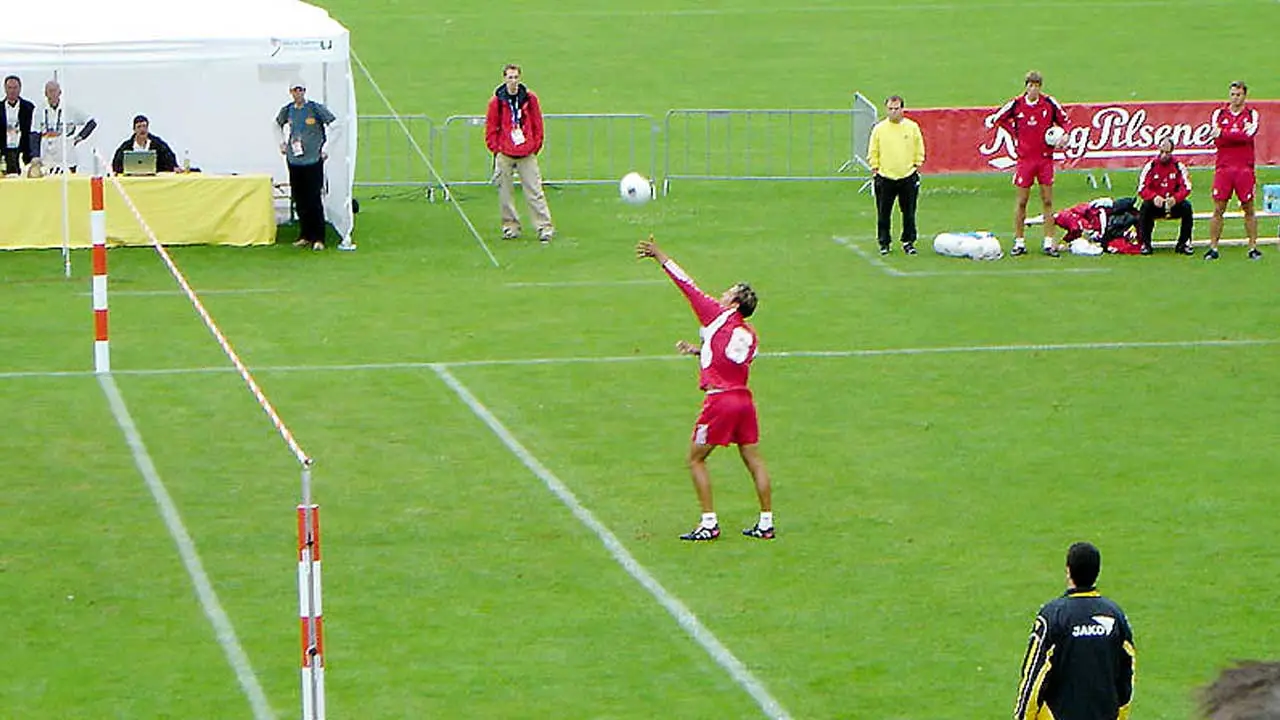
Fistball may look strange to newcomers, but it is one of the most established sports in this guide. Two teams hit a ball over a ribbon or net using a closed fist or arm. The ball may bounce between touches, which creates a different rhythm from volleyball.
Five players usually cover a large court, and powerful serves can travel at serious speed. The sport has international competitions and is included in the World Games. It is especially strong in parts of Europe and South America.
What makes it distinctive: Fistball combines the spacing of a field game with volleyball-like rallies. Because one bounce is allowed before a return, players defend deeper and often strike the ball with a long, whipping motion.
Calling it merely a weird version of volleyball undersells the skill involved.
9. Octopush or Underwater Hockey
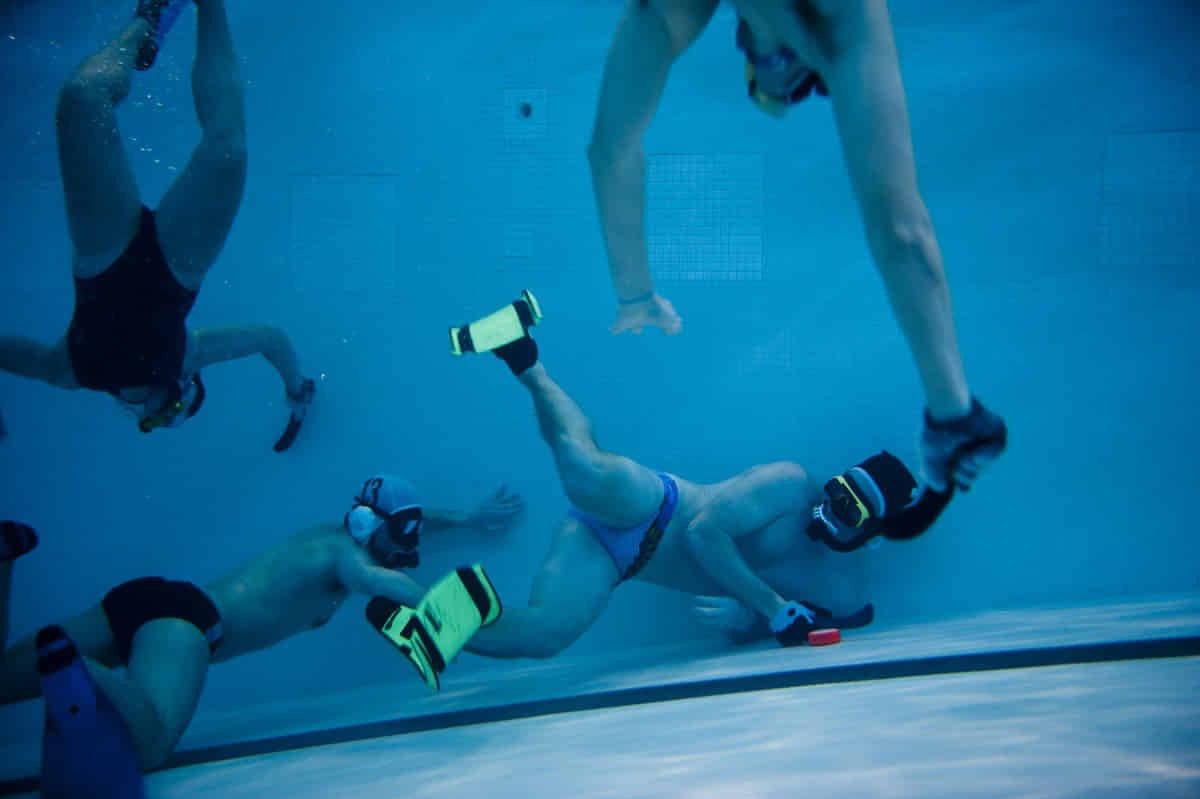
Underwater hockey, also known as octopush, is played on the bottom of a swimming pool. Players wear masks, snorkels, fins, and protective equipment while using short sticks to push a heavy puck toward the opposing goal.
No one can stay underwater for the entire match, so players repeatedly dive, make a pass or challenge, and return to the surface for air. That creates a constantly changing game in which teammates must read movement without ordinary verbal communication.
Why it is harder than it looks: Players need breath control, swimming fitness, spatial awareness, and the ability to make decisions while looking through a mask close to the pool floor.
Unlike some novelty entries here, underwater hockey has organized international competition and a long history dating back to the 1950s.
10. Adult Kickball
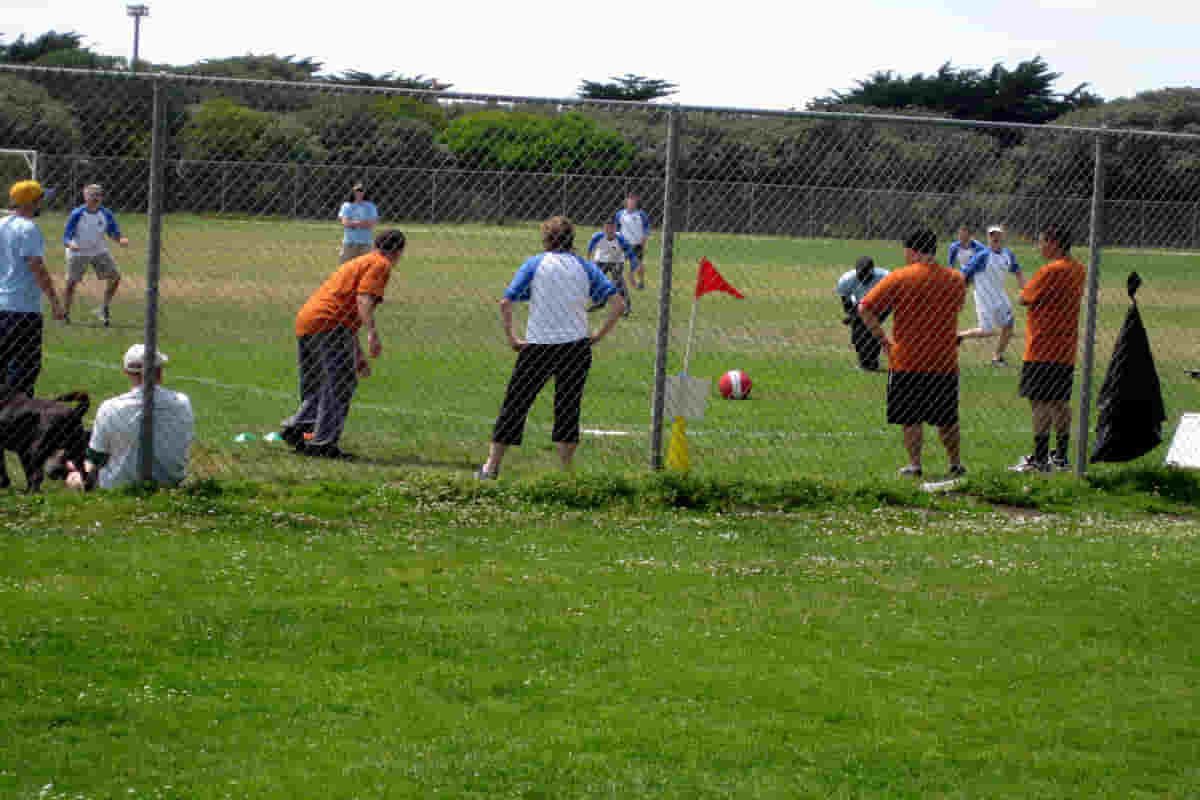
Kickball uses a baseball-like diamond and familiar ideas such as bases, innings, outs, and fielding, but the pitcher rolls a large rubber ball that the batter kicks. Many people know it as a schoolyard game. Adult leagues, however, turn it into a social but properly organized team sport.
The rules vary by league. Some emphasize competition, while others are built around recreation and community. Either way, a well-placed kick, quick base running, and dependable fielding matter.
Why it appears on a weird-sports list: To anyone who grew up with baseball or cricket, watching adults seriously strategize around a giant playground ball can feel delightfully odd.
It is also one of the most accessible sports here. You need less specialist equipment and far less bravery than ferret-legging or cheese rolling.
11. Chess Boxing
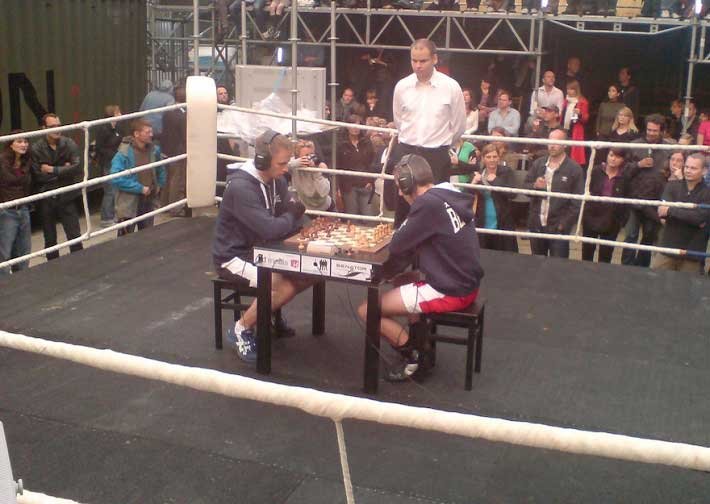
Chess boxing alternates rounds of chess with rounds of boxing. A competitor can win by checkmate, knockout, a time penalty on the chess clock, or a decision under the event’s rules.
The combination sounds like a joke until you consider the mental strain. A boxer must control breathing, adrenaline, and fatigue, then sit down and calculate accurately. A strong chess player must also stay composed knowing another physical round is approaching.
Why it is one of the smartest hybrid sports: The two disciplines attack concentration from opposite directions. Boxing creates exhaustion and stress; chess punishes careless thinking.
Chess boxing has organized clubs and competitions in several countries. It remains niche, but it is far more structured than its unlikely name suggests.
12. Competition between You and Cheese
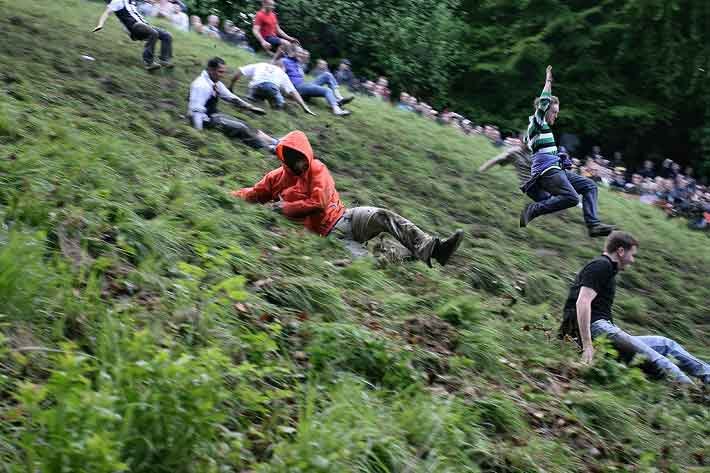
At Cooper’s Hill near Gloucester, competitors chase a wheel of Double Gloucester cheese down a slope so steep that controlled running quickly turns into tumbling, sliding, and hopeful survival. The cheese gets a head start, and the first person across the finish line at the bottom wins.
Few participants actually catch the cheese. The real race is against gravity and everyone else falling beside you. Injuries have long been part of the event’s reputation, which is why cheese rolling should be watched with admiration rather than copied on the nearest hill.
Why it remains famous: The rules are instantly understandable, the visuals are unforgettable, and the contest is tied to a strong local tradition.
Among all weird sports, this may be the clearest example of a simple idea becoming globally recognizable without losing its village character.
Hand-Picked Content: How Does Cheese Get Distributed?
13. Beard and Moustache Competition:
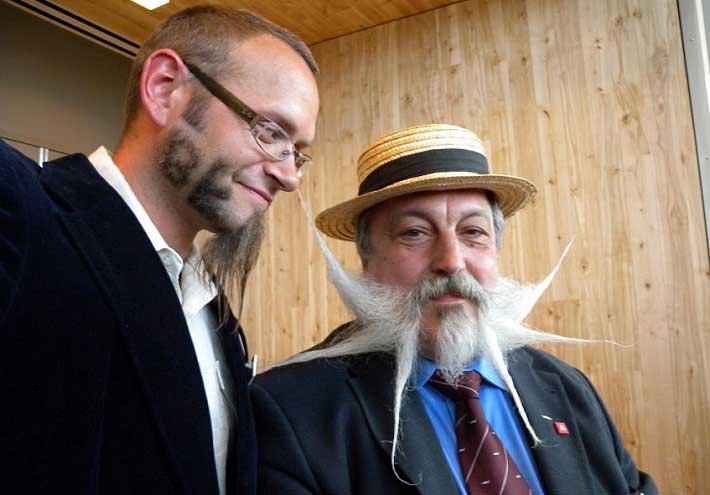
Competitive beard and moustache events judge facial hair across categories ranging from natural moustaches to elaborate freestyle creations. Entrants may spend months or years growing, shaping, and caring for their designs.
This is closer to a judged display competition than an athletic sport, but it uses formal categories, expert evaluation, international events, and serious preparation. Some freestyle entries resemble sculptures more than ordinary grooming.
What judges look for: Shape, condition, symmetry, originality, presentation, and how well the entry fits its category.
Why it belongs here: It shows how easily the language of sport can expand. There are competitors, rules, judges, trophies, training routines, and dedicated fans, even though no one needs to run a single step.
14. Kaiju Big Battel
Kaiju Big Battel mixes professional wrestling, comic-book storytelling, handmade city sets, and performers dressed as giant monsters. The action takes place in a ring surrounded by miniature buildings that are frequently crushed during the match.
The result is theatrical rather than a conventional competitive sport. Performers use wrestling moves, character rivalries, humor, and deliberately low-budget monster-film style to create an ongoing fictional universe.
Why it is weird: The audience is asked to accept that human-sized costumed creatures are enormous monsters fighting over a city. Everyone knows the illusion, and that shared joke is the point.
Kaiju Big Battel is best understood as performance wrestling with a distinctive visual identity, not as an unscripted athletic championship.
15. Cardboard Tube Dueling
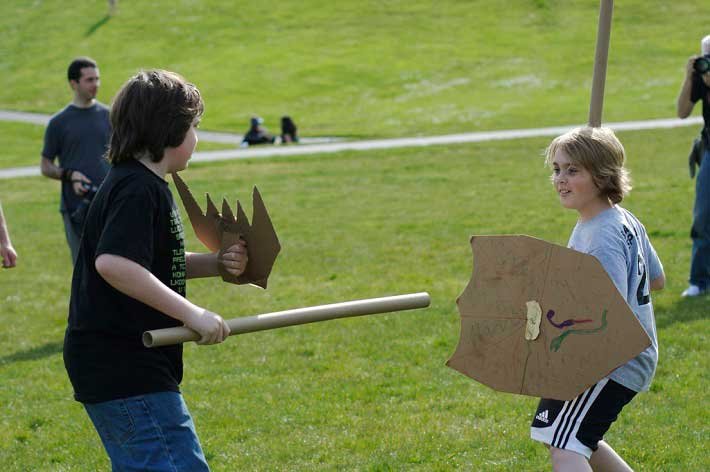
In cardboard tube duelling, opponents face each other with long cardboard tubes and try to break the other person’s tube while keeping their own intact. Hitting the opponent rather than the tube may lead to penalties or disqualification, depending on the event.
The activity became associated with playful organized gatherings in Australia and later appeared at events elsewhere. Protective headgear and clear boundaries help keep a silly idea from becoming unnecessarily painful.
Why people enjoy it: It creates the drama of sword fighting without metal blades, expensive equipment, or much chance of anyone taking themselves too seriously.
This is firmly a novelty contest, but it demonstrates a useful design principle: the simpler the equipment, the easier it is for spectators to understand the challenge immediately.
16. The Mud Pit Belly Flop

A mud pit belly-flop contest rewards participants for launching themselves dramatically into a pool of mud. Depending on the event, judges may consider splash size, style, audience reaction, costume, and commitment.
The best-known examples have appeared as part of festivals and humorous alternative games rather than as a continuous professional sport. The athletic requirement is limited, although confidently landing flat in cold mud takes a type of courage most people are happy not to develop.
Why it is memorable: It transforms a movement swimmers normally avoid into the entire purpose of the competition.
It is also a reminder that not every entry in a weird-sports guide needs a world federation. Some survive because they give a local crowd a funny, repeatable spectacle.
17. Bossaball
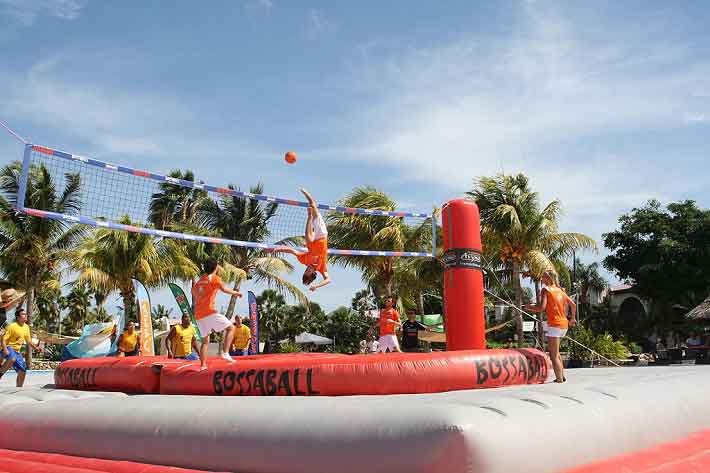
Bossaball blends volleyball, football skills, gymnastics, music, and inflatable trampolines. Teams rally a ball over a net, but a player positioned on the trampoline can jump high enough to produce dramatic overhead kicks and aerial attacks.
Different body contacts can carry different scoring values. The inflatable court reduces the impact of falls and encourages creativity. Music is part of the atmosphere, and some matches use a “samba referee” who combines officiating with entertainment.
Why it stands out: Many hybrid sports simply place two rulebooks beside each other. Bossaball creates a playing surface that changes what athletes can physically do.
It looks like a beach party, but controlling a ball while bouncing several feet in the air requires excellent timing and body awareness.
18. Snow Polo
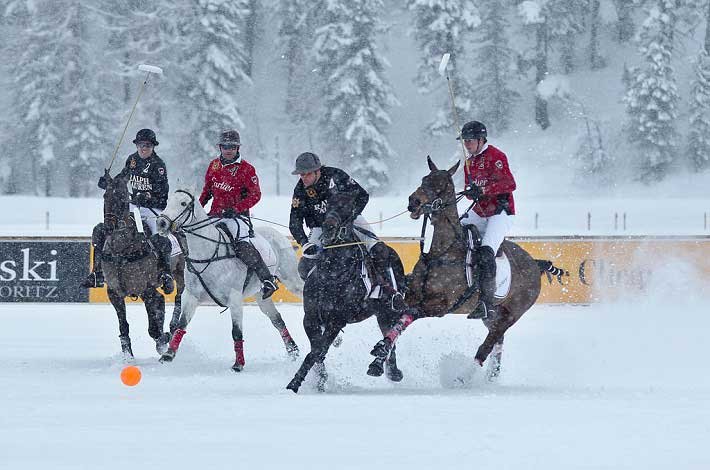
Snow polo is a winter variation of traditional polo played on a compacted snow field. Riders still use mallets and try to drive a ball through the opposing goal, but the surface, temperature, visibility, and footing change the game.
A brightly colored or larger ball is often used so players and spectators can follow it against the snow. Horses may wear special shoes or studs for grip. Prestigious snow-polo events are held in alpine destinations, where the sport carries a polished and expensive image.
Why it feels unusual: Polo is already fast and technically demanding. Moving it from grass to snow adds another layer of balance, preparation, and risk.
Unlike the novelty contests on this list, snow polo is a serious equestrian variation played by experienced riders and specially prepared horses.
19. Wife-carrying
Wife carrying is an obstacle race in which one person carries a partner over a course containing hurdles, sand, and water. The best-known world championship is held in Sonkajärvi, Finland.
Despite the traditional name, modern events may allow different partner combinations as long as competitors meet the organizer’s rules. Carriers use several techniques, including the famous Estonian style, where the carried partner hangs upside down with legs around the carrier’s shoulders.
What makes it difficult: Speed alone is not enough. The pair needs coordination, grip, balance, and a carrying position that survives every obstacle.
The prize has often played on the event’s humor by relating the reward to the carried person’s weight in beer. Still, the fastest teams train seriously.
20. Lawn Mower Racing
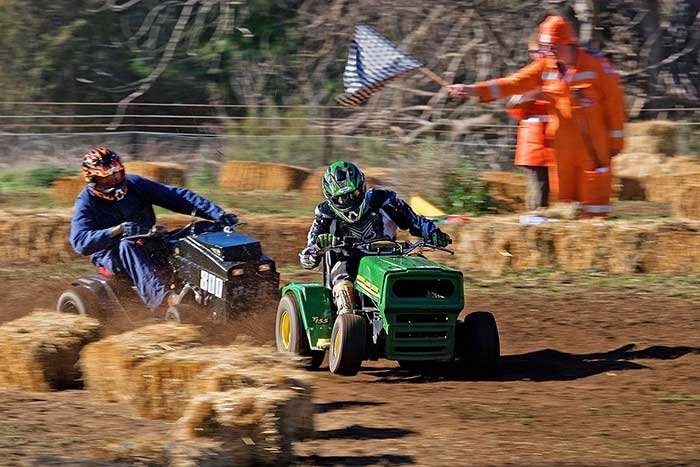
Lawn mower racing began as an affordable form of motorsport using modified ride-on mowers with cutting blades removed. Competitors race around dirt or grass circuits, and some events include endurance formats.
The machines may look familiar from garden sheds, but racing versions can be heavily prepared within class rules. Steering, braking, chassis setup, and driver skill all matter, especially because these vehicles were never originally designed for high-speed cornering.
Why it became popular: It offered motorsport excitement without requiring a conventional race car. The visual joke brings spectators in, while close racing keeps them watching.
Safety equipment and proper event supervision are essential. A mower becomes a real racing machine once speed and competition enter the picture.
21. Pillow Fighting:

Pillow fighting has moved beyond sleepovers into staged combat events with timed rounds, referees, and standardized equipment. Competitors strike with specially designed pillows while using footwork and defensive movement borrowed from combat sports.
A pillow may be softer than a boxing glove, but repeated full-force swings can still be physically demanding. Fighters need stamina, timing, and the ability to generate power without losing balance.
Why it attracts attention: The object is harmless in everyday life, so the contrast between familiar bedroom equipment and serious athletic presentation is instantly funny.
Competitive versions should not be confused with unregulated pillow fights. Rules, safe equipment, and medical oversight are what turn a playful activity into a presentable event.
22. Extreme Ironing

Extreme ironing combines the ordinary chore of pressing clothes with difficult or remote locations. Participants have ironed on mountainsides, underwater, while climbing, and in other places where a laundry board has no sensible reason to appear.
The activity emerged in England during the 1990s and developed a deliberately absurd adventure-sport identity. Part of the challenge is transporting equipment and producing a recognizable ironing setup in an inconvenient environment.
Why it became a cult favorite: It places domestic routine and outdoor danger in the same photograph. The contrast is easy to understand and almost impossible to forget.
Extreme ironing is now more cultural joke and occasional challenge than a stable international competition, but its influence on lists of strange sports is secure.
23. Buzkashi
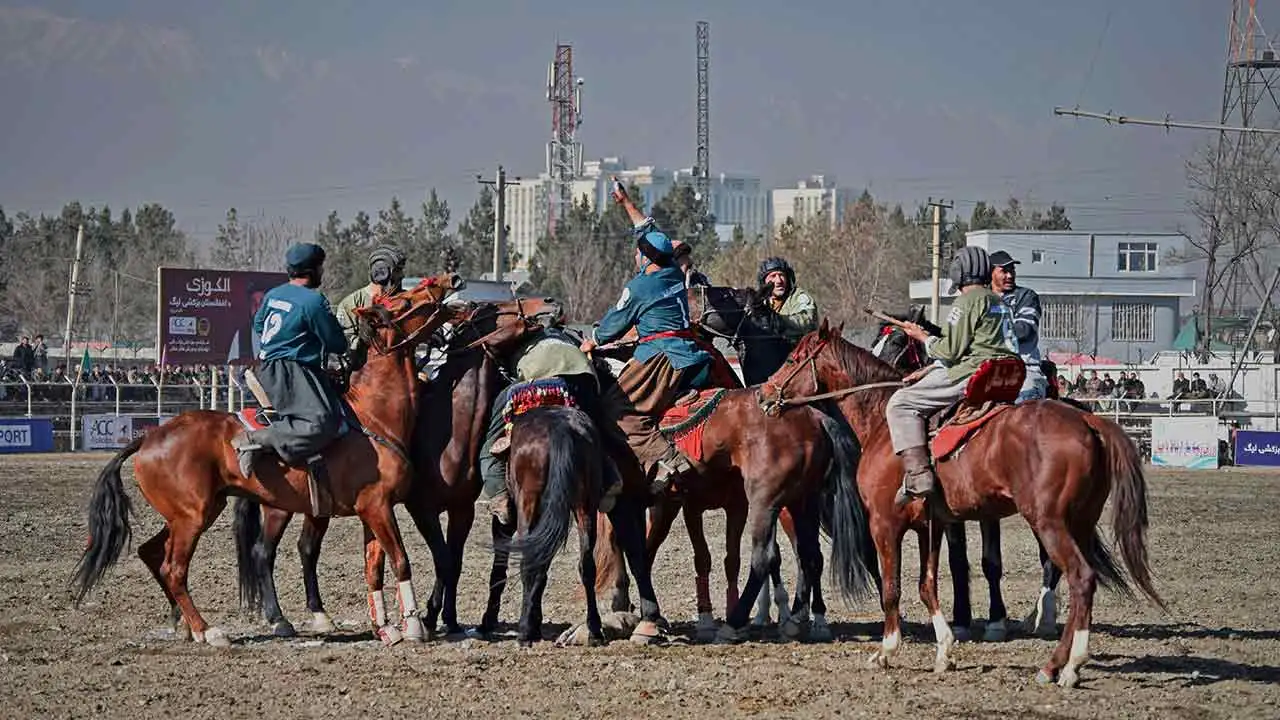
Buzkashi is a traditional Central Asian equestrian sport in which mounted riders compete for control of an animal carcass, traditionally a goat or calf, and try to carry it toward a scoring area. It is strongly associated with Afghanistan and is also played in neighboring countries in varying forms.
The sport demands exceptional horsemanship, strength, courage, and awareness in a dense group of riders. Matches can be rough and difficult for outsiders to follow because local formats and rules differ.
Why it should not be reduced to “weird”: Buzkashi has deep cultural significance. To many participants and spectators, it is not a novelty at all but a respected test of riding skill and status.
Its inclusion here reflects how unfamiliar it appears to global audiences, not a judgment on the tradition itself.
24. Ostrich Racing
Ostrich racing has appeared in parts of Africa and at selected festivals in the United States. In some versions, a rider sits on the bird. In others, ostriches pull small carts.
The speed is real, but control is unreliable. Ostriches can run quickly, change direction suddenly, and throw riders with little warning, which explains much of the spectacle.
Why it is controversial: Animal welfare and rider safety are serious concerns. Ostriches are not domesticated riding animals in the same sense as horses, and forcing them to carry or pull people can cause stress or injury.
For that reason, this entry is best treated as a historical and festival curiosity. Watching a clip is far safer and kinder than seeking a chance to ride one.
25. Thumb Wrestling
Thumb wrestling may be one of the world’s smallest combat sports. Two players clasp hands, raise their thumbs, and try to pin the opponent’s thumb for a count.
Most matches are informal, but organized competitions have created rules governing grip, pin duration, conduct, and match structure. Skill comes from timing, feints, thumb strength, and learning how an opponent reacts.
Why it earns a place: It turns a tiny childhood game into a contest that can support brackets, referees, champions, and tactical discussion.
Compared with many sports here, it is wonderfully safe, cheap, and portable. No field, animal, pool, mountain, or giant cheese wheel is required.
26. Egg-and-Spoon Race
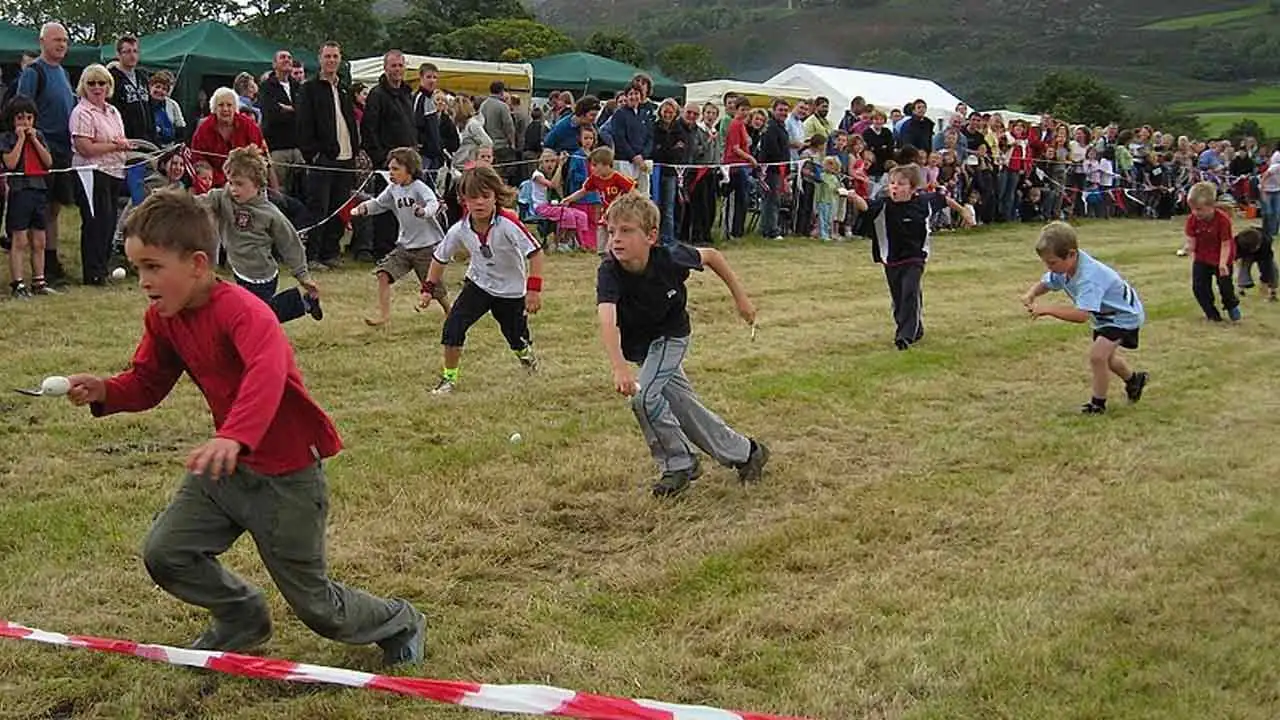
In an egg-and-spoon race, competitors run while balancing an egg on a spoon. Drop it and you may have to stop, replace it, return to a marked point, or accept elimination, depending on the rules.
The race is strongly associated with school sports days and community events in Britain and other countries. It seems simple until speed causes the spoon to bounce and every instinct tells the runner to grip it more tightly.
The real test: It rewards control over raw pace. Smooth runners often beat faster competitors who rush and lose the egg.
Some organizers use hard-boiled eggs or substitutes to reduce mess. Purists may object, but anyone who has cleaned a running track probably understands.
27. Three-Sided Football
Three-sided football places three teams on a hexagonal pitch with three goals. A common format decides the winner by the fewest goals conceded rather than the most goals scored.
That single change creates shifting alliances. Two teams may cooperate temporarily against the side in the strongest position, only for the partnership to collapse when the score changes. Players must constantly decide who represents the greatest threat.
The concept is linked to the ideas of Danish artist and thinker Asger Jorn and later experimental football communities.
Why it is fascinating: Standard football asks two teams to oppose each other. Three-sided football makes trust, negotiation, and betrayal part of the tactics.
It remains niche, but as an experiment in game design, it is one of the cleverest entries on this list.
28. Hornussen: Switzerland’s Puck-Launching Party
Hornussen is a traditional Swiss team sport in which one side strikes a small projectile, called the Nouss, from a launching ramp while the fielding side tries to intercept it with large paddles called Schindeln.
The projectile can travel at high speed and may be hard to see, so fielders watch carefully and react as a group. The batting side aims for distance and points; the defending side tries to prevent the Nouss from reaching the ground in its zone.
Why it looks so strange: From a distance, spectators may see players waving large boards at something almost invisible in the sky.
Hornussen is not a recent novelty. It is a structured part of Swiss sporting culture with clubs, leagues, and long-standing traditions.
29. Sepak Takraw: Southeast Asia’s Flip-Tastic Ball Game
Sepak takraw is a Southeast Asian net sport in which players use their feet, knees, chest, and head to control a woven or synthetic ball. Hands and arms are not used in normal play.
The most spectacular attacks involve players leaping, twisting, and striking the ball overhead with bicycle-kick-like motion. Yet successful teams need more than acrobatics. Precise serving, setting, positioning, and defensive reactions are equally important.
Why newcomers find it unbelievable: It resembles volleyball until someone attacks the ball with a foot above head height.
Sepak takraw is a serious international sport, particularly across Southeast Asia. Among all the games here, it is one of the strongest examples of an activity that seems weird only because many readers have not watched it before.
30. Poohsticks: The UK’s Stick-Floating Fun
Poohsticks is a gentle race made famous by A. A. Milne’s Winnie-the-Pooh stories. Players stand on the upstream side of a bridge, drop sticks into the water, then cross to see which stick appears first on the downstream side.
Organized championships have added lanes, heats, and officiating, but the appeal remains beautifully simple. Current, stick shape, release position, and luck all influence the result.
Why it belongs at the end: After ferrets, bogs, hooves, snowballs, and flying Swiss projectiles, Poohsticks reminds us that a weird sport does not need to be dangerous. It only needs a shared challenge and someone willing to keep score.
Which Weird Sports Are the Most Dangerous?
Risk varies enormously, and “weird” does not automatically mean dangerous. Thumb wrestling and Poohsticks are mild. Underwater hockey, sepak takraw, and fistball are demanding but governed sports with established safety practices.
The higher-risk entries include:
- Cheese rolling, because competitors descend an extremely steep and uneven hill at speed.
- Buzkashi, because many mounted riders contest possession in close quarters.
- Man versus Horse, because runners and horses share challenging terrain.
- Ostrich racing, due to unpredictable animals and welfare concerns.
- Ferret-legging, because it places both participants and animals in an avoidable stressful situation.
- Snow polo and lawn mower racing, which involve speed, specialized equipment, and collision risk.
That does not mean established events are careless. Proper organizers use course controls, protective gear, veterinary checks, medical support, or technical regulations. It does mean readers should not recreate a spectacle simply because it looks funny online.
Why Do People Invent Such Strange Sports?
Most weird sports make more sense once you look at where they came from.
Landscape Shapes the Game
Canals helped produce fierljeppen. Snow made yukigassen possible. Peat bogs gave Wales a race that could not have emerged on a dry athletics track. Communities often turn familiar terrain into a challenge.
Traditions Become Competitions
Buzkashi, hornussen, egg-and-spoon racing, and cheese rolling are tied to cultural or community history. Repetition adds rules; rules create champions; champions keep a tradition visible.
People Enjoy Combining Opposites
Chess boxing joins calculation with physical combat. Bossaball mixes acrobatics with ball control and music. Extreme ironing places calm domestic work in chaotic outdoor locations. The contradiction is what makes the idea memorable.
Some Sports Begin as a Joke and Improve With Structure
A joke can still produce a good game. Once organizers add clear scoring, safe equipment, consistent dimensions, and fair officiating, a ridiculous idea may become surprisingly competitive.
Key Takeaways
- Weird sports are found on every continent and range from folk traditions to modern hybrid games.
- Not every unusual contest is a fully organized sport, so novelty events should be described honestly.
- Many apparently bizarre games require serious athletic skill, particularly sepak takraw, fistball, underwater hockey, fierljeppen, and chess boxing.
- Culture and geography explain why a sport that seems strange abroad may feel completely normal at home.
- Animal-based events deserve additional scrutiny because entertainment should not come before welfare.
- The best weird sports are easy to understand, difficult to master, and connected to a memorable story.
Frequently Asked Questions
What is the weirdest sport in the world?
There is no objective winner, but ferret-legging is often considered one of the weirdest because competitors keep live ferrets inside tied trousers as an endurance challenge. Cheese rolling, bog snorkelling, extreme ironing, and wife carrying are other common answers.
Are weird sports real?
Yes. Many weird sports have written rules, clubs, annual competitions, and recognized champions. Fistball, underwater hockey, sepak takraw, hornussen, yukigassen, and bossaball are genuine organized sports. Other entries, such as mud belly flopping, are better described as festival or novelty contests.
What is the weirdest Olympic sport?
The modern Olympic program contains events that may feel unusual to new viewers, but most sports in this guide are not Olympic sports. Fistball and several other niche games have appeared in major multi-sport settings outside the Olympics, while toe wrestling famously sought but did not gain Olympic recognition.
Which country has the strangest sports?
The United Kingdom has an especially visible collection of eccentric competitions, including cheese rolling, bog snorkelling, toe wrestling, wife carrying events, extreme ironing, and the Man versus Horse Marathon. However, every region has unusual traditions, from Japan’s yukigassen to Switzerland’s hornussen and Central Asia’s buzkashi.
What weird sports are still played today?
Cheese rolling, wife carrying, bog snorkelling, toe wrestling, fierljeppen, yukigassen, fistball, underwater hockey, chess boxing, bossaball, lawn mower racing, hornussen, sepak takraw, and Poohsticks all continue in organized or recurring forms.
What is the safest weird sport to try?
Thumb wrestling, egg-and-spoon racing, recreational kickball, and properly supervised Poohsticks are among the safest and most accessible. Their equipment is simple, and the risk is low when ordinary care is used.
What is the most physically demanding weird sport?
Sepak takraw, fierljeppen, underwater hockey, chess boxing, fistball, and the Man versus Horse Marathon are strong candidates. Each requires a serious combination of conditioning, coordination, technique, and decision-making.
Which weird sport uses a cheese wheel?
Cooper’s Hill Cheese-Rolling and Wake near Gloucester, England, sends a wheel of Double Gloucester down a steep hill before competitors chase it to the bottom.
Which weird sport combines chess and boxing?
Chess boxing alternates timed rounds of chess with boxing. A competitor can win through checkmate, knockout, the opponent’s chess clock expiring, or another result allowed by the competition rules.
Is underwater hockey an official sport?
Yes. Underwater hockey is an organized international sport with clubs, national bodies, formal rules, and world-level competition. Players use short sticks to move a puck along the bottom of a swimming pool.
Final Thoughts
At first glance, weird sports can look like proof that humans will compete over absolutely anything. That is probably true. Yet the closer you look, the more interesting the list becomes.
A canal jump preserves a regional skill. A snowball fight becomes a tactical team game. A pool floor turns into a hockey rink. A hexagonal football pitch becomes an experiment in alliances. Even a stick dropped from a bridge can bring people together if someone asks, “Which one will reach the other side first?”
That may be the best thing about strange sports. They stretch our idea of what competition can look like without losing the familiar reasons people play: challenge, community, tradition, curiosity, and a little harmless fun.